


Industrial Remote Relay Control System
Control electrical equipment and switching operations through Ethernet-based relay technology. Nex-G Automation provides TCP/IP relay control solutions designed for industrial applications that require network-based equipment operation and remote switching.
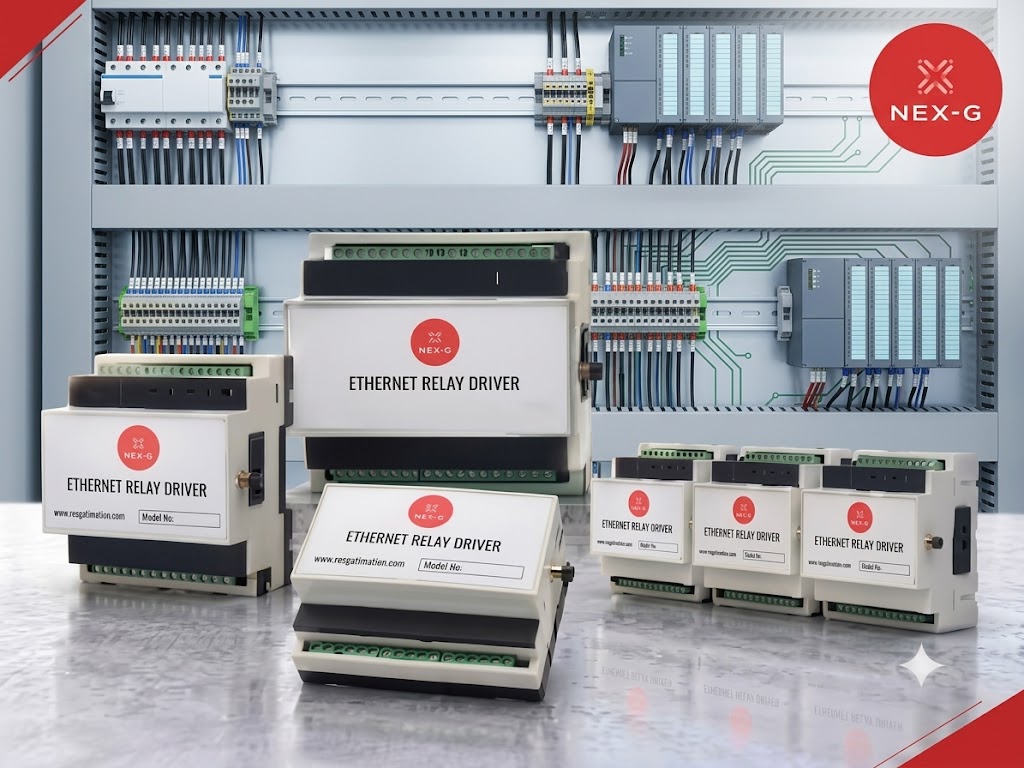
Remote Relay Switching for Industrial Equipment
Industrial facilities often need to operate electrical equipment located in different areas of a plant, production floor or technical installation. A network-based relay control system provides a way to operate compatible electrical circuits through an Ethernet connection instead of relying only on local manual switching.
An Ethernet remote relay control system connects relay outputs to a network-enabled controller. Commands can be sent from a compatible control application or computer over the network, allowing the relay outputs to change their switching state according to the configured control method.
Nex-G Automation's Ethernet relay controller range is available in 4-channel, 8-channel and 16-channel configurations. The suitable configuration depends on the number of outputs, electrical load requirements and the intended application.
This approach can be considered for industrial remote switching, electrical panel control, machine operation and other applications where Ethernet-based relay communication is appropriate.
What Is an Ethernet Remote Relay Control System?
It is a relay-based switching arrangement in which commands are communicated through an Ethernet network using TCP/IP. The relay controller receives compatible commands and changes the state of its connected relay outputs.
How Ethernet-Based Remote Relay Control Works
The relay controller acts as the switching interface between network commands and connected electrical circuits. The exact command format and integration method depend on the selected controller model and application.
Control Application
An operator or compatible application initiates a switching command from a computer or control system.
Ethernet Network
The command is communicated through the configured Ethernet network using TCP/IP communication.
Relay Controller
The Ethernet relay controller receives and processes a supported command for the selected output.
Electrical Switching
The corresponding relay contact changes state to control a compatible connected circuit.
Applications of Remote Relay Control Systems
Ethernet-based relay controllers can be considered for different industrial and commercial applications where network-controlled electrical switching is required.
Industrial Machine Switching
Use compatible relay outputs for switching control circuits associated with industrial machines and production equipment.
Electrical Panel Control
Incorporate Ethernet relay controllers into suitable electrical panel designs for network-based output switching.
Remote Equipment Operation
Operate compatible electrical circuits from a configured computer or control application over an Ethernet network.
Industrial Automation
Use relay outputs as part of an automation arrangement where network-based switching is required.
Testing and Control Setups
Apply network-controlled relay outputs in compatible equipment testing benches and electrical control arrangements.
Building and Facility Systems
Consider Ethernet relay switching for suitable facility-level electrical control applications, subject to load and safety requirements.
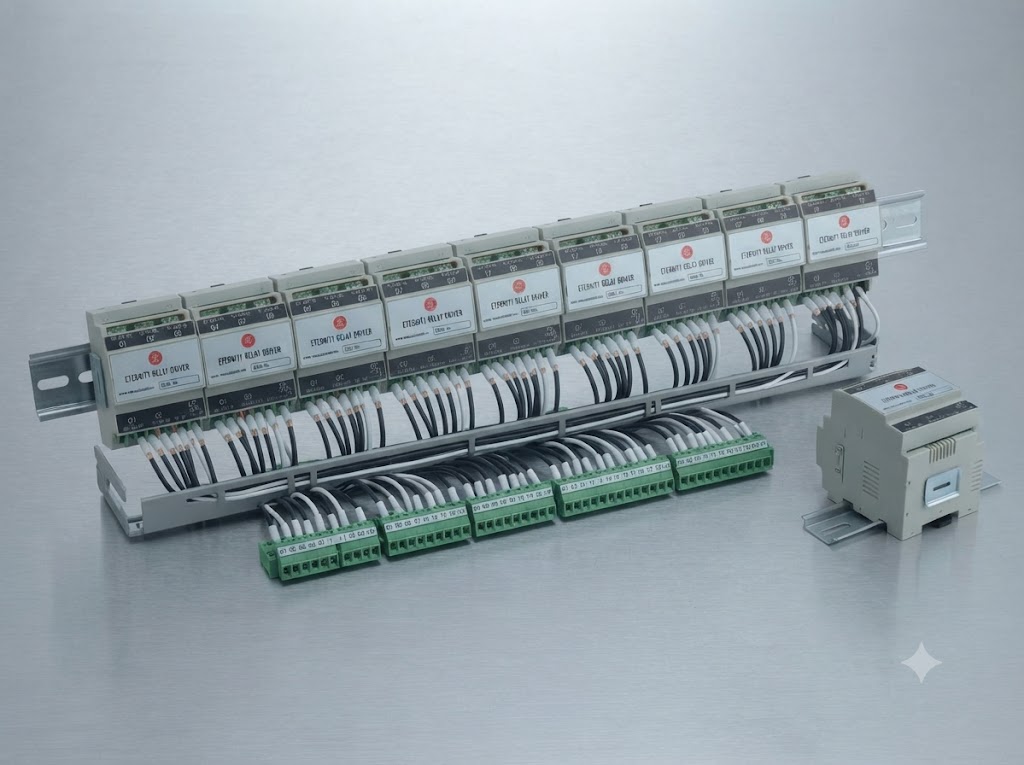
Ethernet-based 16-channel relay controller
Why Use an Ethernet Relay Control System?
Network-based relay control can simplify switching arrangements in installations where a compatible Ethernet connection and centralized control method are available.
Network-Based Switching
Communicate supported switching commands through an Ethernet network instead of depending entirely on local manual operation.
Multiple Output Options
Select from 4-channel, 8-channel or 16-channel configurations according to the required number of relay outputs.
Flexible Installation
Choose a suitable controller and mounting arrangement according to the electrical panel and installation requirements.
Computer-Based Control
Use a compatible computer or control application to issue supported relay switching commands through the network.
Integration Flexibility
Evaluate integration with suitable automation applications based on the controller's supported communication interface and command format.
Centralized Switching Arrangement
Organize multiple compatible switching outputs through a network-connected relay controller.
Ethernet Relay Controller Configurations
The number of relay channels can be selected according to the switching points required in the application. Confirm the exact model and electrical ratings before finalizing a system design.
| Configuration | Relay Outputs | Typical Selection Consideration |
|---|---|---|
| 4-Channel Relay Controller | 4 relay outputs | Suitable where a smaller number of switching points is required. |
| 8-Channel Relay Controller | 8 relay outputs | Suitable for applications requiring multiple independently controlled outputs. |
| 16-Channel Relay Controller | 16 relay outputs | Suitable for installations with a higher number of relay switching points. |
Note: Available configurations, relay contact types, supply voltage and enclosure options are model-dependent. Refer to the product specification before installation.
Technical Considerations for Industrial Relay Automation
Selecting an Ethernet relay controller requires attention to both network communication and electrical switching requirements.
Network and Communication Requirements
The controller must be configured for the intended Ethernet network. Network addressing, communication access, command format and application compatibility should be checked during system planning.
For PLC, SCADA or other automation integration, confirm that the selected controller's communication method and command interface are supported by the intended control system. Integration should be validated before deployment.
Electrical Load and Safety
Relay contact ratings must be selected according to the connected load. Inductive loads, motor circuits and high-inrush equipment may require additional protection or appropriately rated contactors and switching devices.
Do not exceed the specified voltage or current ratings. Installation and wiring should be carried out by qualified personnel using suitable electrical protection.
Looking for an Ethernet-Based Relay Board?
Explore the Nex-G Automation Ethernet relay controller product page for channel configurations, relay specifications, connectivity details and product information.
Industrial Remote Relay Control – FAQs
Common questions about Ethernet-based relay control, remote switching and industrial applications.
An industrial remote relay control system uses a relay controller to switch compatible electrical circuits based on commands received through a communication interface such as Ethernet. It can be used in suitable machine control, equipment switching and industrial automation applications.
An Ethernet relay controller connects to a network and receives supported commands from a compatible control application or device. When a valid switching command is processed, the corresponding relay output changes its contact state.
Yes, an Ethernet relay board can be considered for remote switching of compatible machine control circuits. The application must be designed around the relay's electrical ratings, the machine's control requirements and appropriate safety interlocks.
Nex-G Automation's Ethernet relay controller range includes 4-channel, 8-channel and 16-channel configurations. Confirm the required model and available options before ordering.
Integration may be possible when the PLC or SCADA application supports the controller's communication method and command interface. The exact integration requirements should be checked against the selected relay controller model.
A compatible computer or software application can be used to send supported switching commands over the configured Ethernet network. The communication method depends on the controller model and its configuration.
Check the relay contact voltage and current ratings, load type, inrush current, protection requirements and wiring arrangement. Motor and inductive loads may require additional switching and protection components. Use qualified electrical personnel for installation.
You can contact Nex-G Automation through the website's contact page to discuss the required channel count, electrical ratings, network configuration and intended industrial application.
Planning an Ethernet-Based Relay Control System?
Discuss your remote switching requirements with Nex-G Automation. Share your application, number of switching points and electrical requirements to identify a suitable relay controller configuration.